
Hearing Aids for Children in Pakistan: Fitting, Types & What Parents Should Know
- BTE (behind-the-ear) styles are the clinical standard for children — the ear mold is remade as the ear grows while the hearing aid stays the same.
- Real-ear measurement (REM/DSL prescription) is essential for children because their ear canal acoustics differ significantly from adults.
- Early fitting — ideally before 6 months in confirmed cases — protects speech and language development during the critical window.
A child's ability to hear in the first years of life is directly linked to their ability to develop speech and language. For every month that a significant hearing loss goes unaddressed in an infant or young child, there is a measurable impact on the developmental pathway. This is not meant to alarm — it is meant to motivate: early identification and early fitting are the two factors most associated with good outcomes for children with hearing loss.
This guide is written for parents and caregivers in Pakistan who are navigating this journey for the first time. We cover the diagnostic tests used to confirm hearing thresholds in children, the types of hearing aids suited to paediatric use, the importance of professional fitting, and what you can expect at a child's first appointment at Ensound Hearing Centre.
Why Early Fitting Is Critical
The brain's auditory cortex — the region responsible for processing sound and developing language — undergoes rapid development in the first three to five years of life. During this critical period, consistent auditory stimulation is essential for normal language acquisition.
A child who does not receive adequate sound input during this period may experience:
- Delayed or absent speech development
- Reduced phonological awareness (the ability to hear and manipulate the sounds of language)
- Difficulties with literacy, since reading is closely linked to phonological processing
- Social difficulties arising from communication barriers in school environments
The goal of paediatric hearing aid fitting is to provide the auditory system with sufficient, appropriately amplified input during this critical window — as early as possible after diagnosis.
How Hearing Loss Is Diagnosed in Infants and Young Children
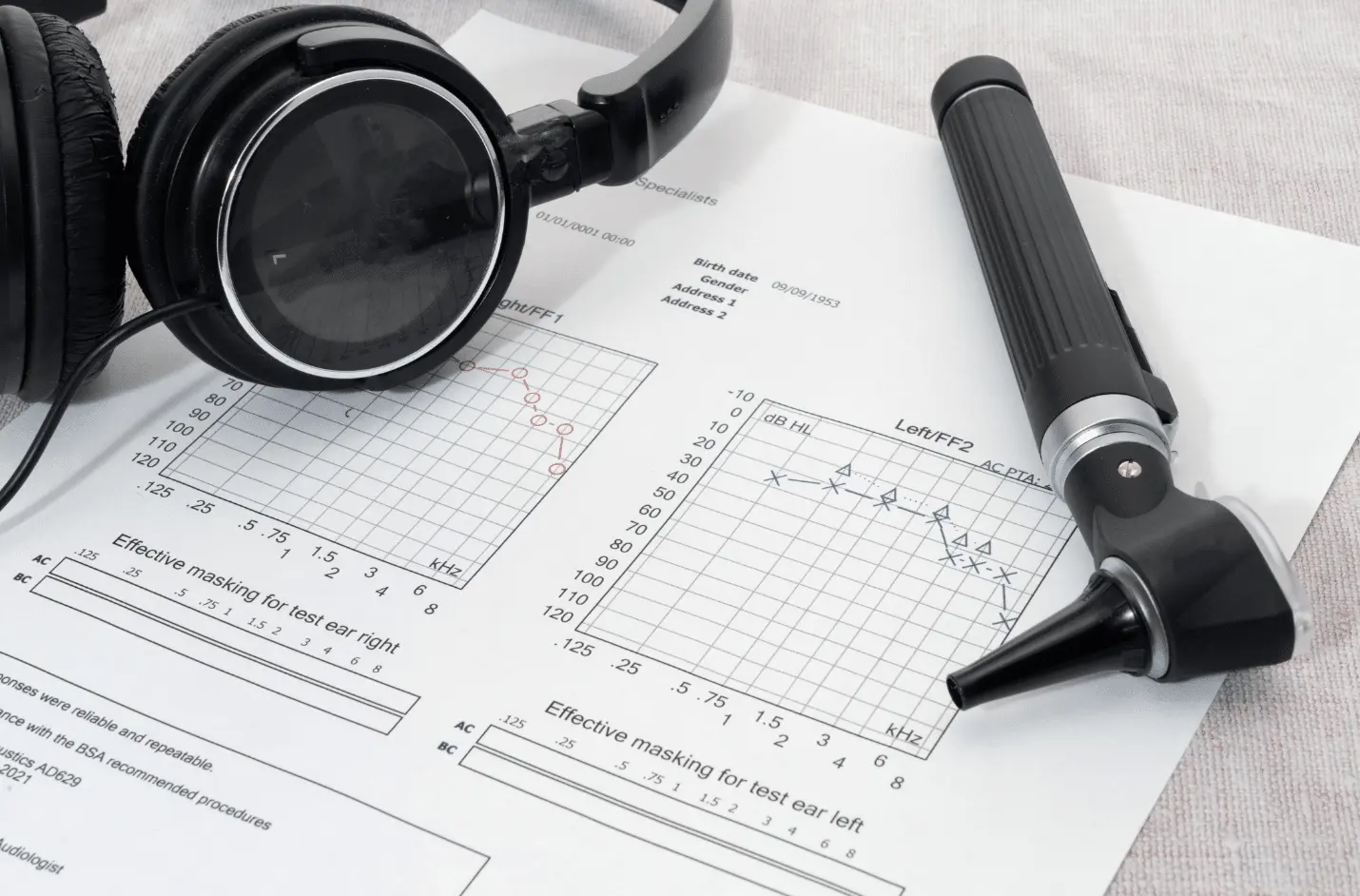
Unlike adults, infants and young children cannot reliably participate in standard Pure Tone Audiometry (PTA), which requires the patient to press a button when they hear a sound. For younger children, objective tests that do not require a behavioural response are used.
BERA (Brainstem Auditory Evoked Response Audiometry)
BERA — also called ABR (Auditory Brainstem Response) — measures the electrical activity of the auditory nerve and brainstem in response to sound stimuli delivered through earphones. Small electrodes are placed on the child's scalp (typically while the child is sleeping naturally or under sedation). The test does not require the child to respond in any way.
BERA provides frequency-specific threshold estimates and is one of the most reliable methods for confirming the degree and type of hearing loss in infants. It is the standard diagnostic tool used before fitting hearing aids to young children.
ASSR (Auditory Steady State Response)
ASSR is a related objective test that uses continuous, frequency-specific stimuli to derive frequency-by-frequency hearing thresholds. It is particularly useful for estimating thresholds in the severe to profound hearing loss range, and for mapping the audiogram across multiple frequencies simultaneously. BERA and ASSR are often used together to build a comprehensive picture of a child's hearing before fitting.
OAE (Otoacoustic Emissions)
OAE testing, as described in our article on noise-induced hearing loss, assesses the function of the outer hair cells of the cochlea. It is fast, non-invasive, and frequently used as a first-level screen in neonatal hearing screening programmes. An absent OAE response indicates a need for further diagnostic testing.
Behavioural Audiometry
As children develop — typically from around 6 months — behavioural observation audiometry (BOA), visual reinforcement audiometry (VRA), and conditioned play audiometry (CPA) can be used to obtain behavioural hearing thresholds in a child-friendly, game-based format. These are used alongside objective tests to cross-check findings.
At Ensound Hearing Centre, we offer BERA, ASSR, OAE, and PTA as part of our diagnostic assessment services.
Preferred Hearing Aid Styles for Children
Behind-the-Ear (BTE) with Custom Ear Mould
The BTE hearing aid with a custom-made ear mould is the standard recommended style for children, and for good clinical reason:
- The ear mould can be remade as the child's ear grows, without replacing the device
- The device itself is robust and sits behind the ear, away from the active and sometimes rough-and-tumble environment of a child's daily life
- Paediatric BTE devices can be fitted with safety features including retention cords and tamper-resistant battery doors
- BTE devices can accommodate the higher power levels sometimes required for more significant hearing loss
Custom ear moulds are included at Ensound Hearing Centre for paediatric patients where clinically indicated. Because children's ears grow rapidly — particularly in infancy and early childhood — ear moulds typically need to be replaced every few months for young children, and less frequently as growth slows.
Receiver-in-Canal (RIC) for Older Children
For older children and teenagers with mild to moderate hearing loss, slim RIC devices are sometimes appropriate. They are less visible and more cosmetically acceptable for older children who may be self-conscious. The decision between BTE and RIC depends on the degree of loss, the ear canal anatomy, and the child's age and lifestyle.
Brands with Dedicated Paediatric Ranges
Not all hearing aid manufacturers invest equally in paediatric research and fitting software. Brands with dedicated paediatric fitting protocols include:
- Oticon — the Oticon Zeal is specifically designed for children, with durable construction, paediatric fitting software (Genie 2 with paediatric prescriptive targets), and compatibility with classroom FM/Roger systems
- Widex — offers paediatric-specific fitting options with a strong reputation for sound quality and soft sound amplification, which is important in young children who need access to very quiet speech
- Phonak — the Sky range is Phonak's paediatric offering, also compatible with Roger FM systems
The brand selection for a child follows the same principle as for adults: the audiogram, the degree of loss, and the fitting protocol are more important than the brand name.
Classroom Support: FM Systems
One of the most important but often overlooked aspects of paediatric hearing aid fitting is classroom performance. Even with well-fitted hearing aids, a child in a typical classroom faces challenges:
- Distance from the teacher — sound level drops significantly as distance increases
- Classroom reverberation — sound reflects off walls and ceilings, degrading speech clarity
- Background noise — other students, ambient noise, and HVAC systems all compete with the teacher's voice
Remote microphone (FM/Roger) systems address this directly. The teacher wears a small microphone transmitter, which sends the audio signal wirelessly to the child's hearing aids, bypassing the distance and noise of the classroom environment. Research consistently shows that FM systems significantly improve speech understanding and learning outcomes for children with hearing loss in mainstream school settings.
During a paediatric fitting at Ensound, we discuss classroom support as part of the counselling session, including how to liaise with the child's school.
What to Expect at a Child's First Appointment at Ensound
A first paediatric appointment at Ensound Hearing Centre is structured to be calm and child-friendly. Here is what typically happens:
- Case history — we take a detailed history from the parents, including pregnancy, birth history, developmental milestones, family history of hearing loss, and any previous test results
- Otoscopy — a visual examination of the ear canal and eardrum
- OAE and/or Tympanometry — quick, non-invasive tests that can be completed even in unsettled or young children
- Behavioural or objective testing — depending on the child's age and cooperation (BERA/ASSR for infants; VRA or CPA for toddlers; PTA for older children)
- Counselling — we explain the results to parents clearly and discuss the recommended next steps, including hearing aid options and fitting timelines
- Fitting appointment (subsequent visit) — if hearing aids are indicated, ear mould impressions are taken and a fitting is scheduled
Following a hearing aid fitting, the first review is scheduled at four weeks — an important milestone for checking device performance and making adjustments based on real-world use. We then provide one year of free programming to support the family through the adaptation period. All paediatric fittings include six months of batteries and a one-year manufacturer warranty.
Key Takeaways
- Early identification and fitting of hearing loss in children protects speech, language, and educational development during the critical developmental window.
- BERA, ASSR, and OAE are objective tests that do not require the child to respond — they are essential for diagnosing hearing loss in infants and young children.
- Behind-the-ear (BTE) hearing aids with custom ear moulds are the standard paediatric style because moulds can be remade as the ear grows.
- FM/Roger systems significantly improve classroom listening and are a key part of paediatric audiological rehabilitation.
- At Ensound, paediatric fittings include a four-week review, one year of free programming, custom ear moulds, six months of batteries, and manufacturer warranty.
Arrange Your Child's Hearing Assessment
If you have concerns about your child's hearing — at any age — early professional assessment is the right step. Our clinical team at Ensound Hearing Centre in DHA Phase 1, Lahore has experience in paediatric audiology and works closely with families throughout the diagnosis, fitting, and follow-up process.
Contact us to book your child's appointment →
Related articles:
Related Hearing Care Guides
Need Personalized Advice on Hearing Aids?
Book a diagnostic consultation with our audiologists at 12-G Second Floor, Phase 1 DHA, Lahore.