
Tinnitus and Sleep: Why Ringing in the Ears Gets Worse at Night & What Helps
- Tinnitus appears louder at night because external sound masking drops — the brain's auditory cortex amplifies internal signals in silence.
- Sleep disruption from tinnitus creates a negative cycle: fatigue increases tinnitus perception, which worsens sleep further.
- Modern hearing aids with built-in fractal sound generators (ocean waves, pink noise) can provide continuous low-level masking before sleep.
For the millions of people worldwide who live with tinnitus — the perception of ringing, buzzing, hissing, or clicking sounds that have no external source — nighttime is often the hardest part of the day. The ringing that was manageable during a busy afternoon becomes impossible to ignore the moment the house goes quiet and the lights go off.
If this is your experience, you are not alone, and you are not imagining it. There are clear, well-understood reasons why tinnitus perception intensifies at night — and there are effective, evidence-based strategies to help manage it.
This article explains the science behind the nighttime tinnitus effect, the sleep disruption cycle it creates, and what patients in Pakistan can do about it — from practical strategies at home to clinical interventions available at an audiology centre.
Why Tinnitus Feels Louder at Night
Tinnitus is not simply a noise in the ear. It is a perception generated by the auditory system — typically in response to damage, reduced input, or altered processing somewhere along the hearing pathway. During the day, this internal signal is competing with a constant stream of external sounds: traffic, conversation, fans, television, and the ambient noise of daily life. This background sound acts as a natural masker, reducing the perceived contrast between the tinnitus signal and the environment.
At night, that masking disappears.
In a quiet bedroom, the auditory brain has little else to process. The relative prominence of the internal tinnitus signal increases dramatically — not because the tinnitus itself has become louder, but because there is no longer a background against which it recedes. This phenomenon is called reduced external masking, and it is the primary reason that bedtime is the peak distress period for most tinnitus sufferers.
Additionally, the act of lying down and preparing for sleep directs attention inward. With fewer external distractions, the brain focuses more intently on whatever auditory signals remain — which, for a tinnitus patient, means focusing on the ringing itself.
The Sleep Disruption Cycle
The relationship between tinnitus and sleep disturbance is bidirectional and self-reinforcing.
How Tinnitus Disrupts Sleep
- Difficulty falling asleep (sleep-onset insomnia): The quiet of the bedroom amplifies tinnitus perception, making it hard to settle.
- Nocturnal awakenings: Patients often wake in the night and immediately notice the tinnitus, making it difficult to return to sleep.
- Reduced sleep quality: Even when sleep is achieved, the stress of nighttime tinnitus is associated with shallower, less restorative sleep.
How Poor Sleep Worsens Tinnitus
Sleep deprivation increases generalised stress and heightens activity in the limbic system — the brain's emotional processing centre. The limbic system plays a central role in tinnitus distress: it is the reason why two people with audiologically identical tinnitus can experience very different levels of psychological impact. Sleep deprivation amplifies emotional reactivity, reduces resilience, and lowers the threshold at which the tinnitus signal is perceived as threatening or distressing.
The result is a cycle: tinnitus disrupts sleep → poor sleep increases anxiety and emotional sensitivity → heightened anxiety makes tinnitus more salient and distressing → tinnitus disrupts sleep further.
Breaking this cycle is the central goal of tinnitus management.
Evidence-Based Management Strategies
There is no single cure for tinnitus, but there is a well-established body of evidence supporting several management approaches that significantly reduce its impact on sleep and daily life.
1. Sound Therapy
Sound therapy uses external sound to reduce the perceptual contrast between tinnitus and the environment — reintroducing the masking that disappears in silence. Common options include:
- White, pink, or brown noise played through a bedside speaker or sound machine. Pink noise (in which lower frequencies are louder than higher ones) is often preferred as it sounds less harsh than white noise and has some evidence for promoting deeper sleep.
- Nature sounds such as rain, ocean waves, or flowing water. Many patients find these less clinical and easier to tolerate over extended periods.
- Music or audio content at low volume, which engages the auditory cortex and reduces focus on the internal tinnitus signal.
- Notched music therapy — an emerging approach in which audio content is filtered to remove frequencies around the patient's tinnitus pitch, with the goal of reducing cortical hyperactivity at that frequency over time.
Sound therapy is most effective when it is audible enough to reduce tinnitus salience but not so loud that it prevents sleep onset.
2. Sleep Hygiene
Improving the conditions for sleep reduces the stress that amplifies tinnitus perception. Key evidence-based sleep hygiene practices include:
- Maintaining a consistent sleep and wake time, including weekends
- Avoiding caffeine after mid-afternoon and limiting alcohol (alcohol worsens sleep architecture even when it initially seems to promote drowsiness)
- Keeping the bedroom cool, dark, and dedicated to sleep
- Avoiding screens (phones, tablets, television) for 45–60 minutes before bed, as blue light suppresses melatonin production
- Using the bedroom only for sleep — not for work, scrolling, or watching television. This maintains the brain's association between the bedroom environment and sleep.
3. Cognitive Behavioural Therapy for Tinnitus (CBT-T)
CBT for tinnitus is among the most rigorously evidenced interventions for tinnitus-related distress, including sleep disruption. It works not by reducing the physical loudness of tinnitus but by changing the meaning the brain assigns to it.
CBT-T helps patients:
- Identify and restructure catastrophic or unhelpful thoughts about tinnitus ("I will never sleep again," "This is going to drive me mad")
- Develop habituation — the process by which the auditory brain gradually reduces the threat response to the tinnitus signal, much as it habituates to other constant, neutral stimuli
- Use relaxation and mindfulness techniques to reduce the hyperarousal that maintains the tinnitus-distress-insomnia cycle
CBT-T is typically delivered over 6–12 sessions with a trained psychologist or audiologist with specialist training. Digital CBT programmes have shown comparable outcomes to face-to-face delivery in several studies.
How Modern Hearing Aids Help With Tinnitus at Night
For patients who have both hearing loss and tinnitus — which is the majority, since tinnitus most commonly arises from sensorineural hearing loss — modern hearing aids offer several layers of benefit.
Built-In Sound Generators
Many contemporary hearing aid models include built-in tinnitus sound generators that can produce ocean wave sounds, pink noise, white noise, or fractal tones. These can be activated in quiet environments — such as a quiet office or bedroom — to restore background sound masking without the need for a separate bedside device.
Some models allow the user to stream these tinnitus-relief sounds directly from the accompanying smartphone app, adjusting the volume and nature of the sound at any time.
Addressing the Root Cause
For many tinnitus patients, the tinnitus arises because the auditory cortex has become hyperactive in response to reduced auditory input from a damaged cochlea. Hearing aids restore that auditory input, potentially reducing the cortical activity that drives tinnitus perception. This is why properly fitted hearing aids — programmed to the individual's audiogram — can provide meaningful tinnitus relief for many patients, even when tinnitus management was not the primary reason for fitting.
First Follow-Up and Ongoing Support
Tinnitus management with hearing aids is not a one-appointment process. At Ensound Hearing Centre, DHA Phase 1, Lahore, all hearing aid patients have a dedicated follow-up appointment four weeks after fitting, with one year of free programming adjustments to fine-tune the sound generator and amplification settings as the patient's experience and needs evolve.
When to Seek a Clinical Tinnitus Assessment
You should arrange a formal tinnitus and hearing assessment if:
- Tinnitus has persisted for more than three months
- It is significantly affecting your sleep or daily functioning
- It is present in only one ear (which warrants urgent investigation to rule out specific medical causes)
- It is accompanied by dizziness, vertigo, or sudden hearing loss
- It has appeared suddenly or changed character recently
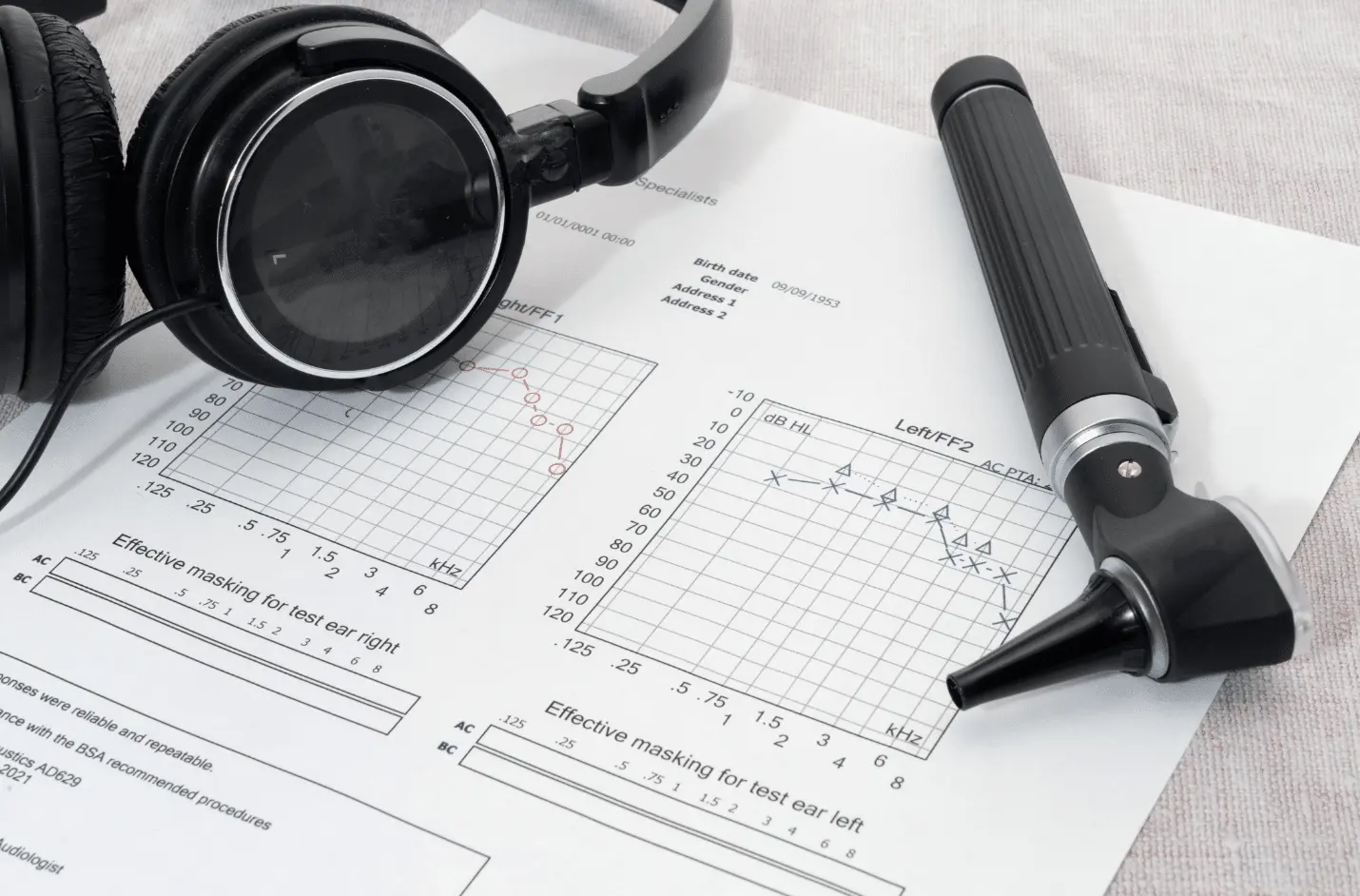
At a dedicated audiology centre, a tinnitus assessment includes a full hearing evaluation (PTA, tympanometry, OAE) as well as specific tinnitus characterisation — identifying the pitch and perceived loudness of the tinnitus — and a discussion of appropriate management pathways.
Related reading: Tinnitus Treatment in Lahore | What to Expect at a Hearing Test | Hearing Aids for Tinnitus Relief
Key Takeaways
- Tinnitus appears louder at night because external background sounds that naturally mask it during the day are absent in a quiet bedroom.
- The disruption cycle is bidirectional: tinnitus worsens sleep, and poor sleep increases tinnitus distress.
- Sound therapy (white or pink noise, nature sounds) is an effective and accessible first-line strategy to reduce nighttime tinnitus impact.
- CBT for tinnitus has strong clinical evidence for reducing distress and improving sleep, and works by retraining the brain's response — not by silencing the sound.
- Hearing aids with built-in sound generators address tinnitus from multiple angles: masking in quiet environments, restoring auditory input to reduce cortical hyperactivity, and providing programmable relief sounds.
- Persistent, one-sided, or sudden-onset tinnitus should always be evaluated clinically.
Get a Tinnitus Assessment in Lahore
If tinnitus is affecting your sleep and quality of life, a clinical assessment is the right starting point. Our audiology team at Ensound Hearing Centre, DHA Phase 1, Lahore, will conduct a comprehensive hearing and tinnitus evaluation and help you develop a personalised management plan.
Related Hearing Care Guides
Need Personalized Advice on Hearing Aids?
Book a diagnostic consultation with our audiologists at 12-G Second Floor, Phase 1 DHA, Lahore.