How Much Does a Hearing Test Cost in Lahore? What's Included & What to Expect
- A comprehensive diagnostic hearing test includes otoscopy, pure tone audiometry, tympanometry, and at least one objective test (OAE or BERA).
- Price varies depending on the tests included and the type of facility — a hospital audiology department differs from a specialist hearing centre.
- Avoid clinics that skip the audiogram and jump straight to recommending a device — an accurate threshold map is non-negotiable for correct fitting.
If you or a family member has been experiencing difficulty hearing conversations, asking people to repeat themselves, or turning up the television louder than usual, a hearing test is the logical first step. But many people in Lahore put it off simply because they are unsure what a hearing test involves, how long it takes, or whether the cost reflects genuine clinical value.
This guide breaks down everything you need to know — from the tests that make up a proper diagnostic hearing evaluation, to the questions worth asking before you book an appointment.
What Is a Diagnostic Hearing Test (and Why Does It Differ from a Quick Screening)?
A basic hearing screening — often carried out at a school, health camp, or ENT clinic waiting room — tells you only whether a hearing concern is likely present or not. It is a pass/fail exercise, not a diagnosis.
A full diagnostic audiological evaluation is substantially more detailed. At a dedicated audiology centre, a comprehensive assessment typically includes:
- Otoscopy — a visual examination of the ear canal and eardrum to rule out wax blockage, perforation, or infection before any acoustic tests begin.
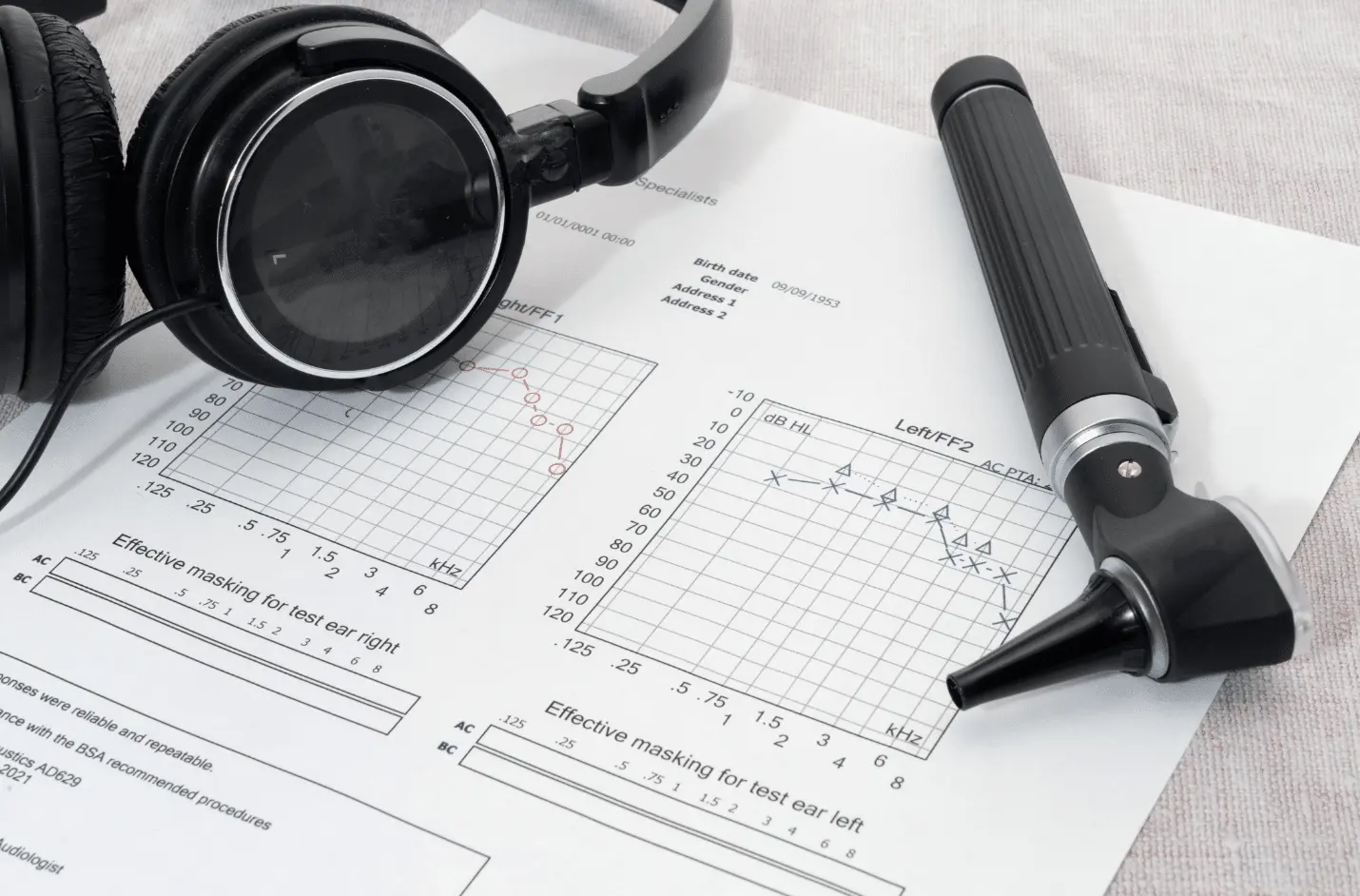
- Pure Tone Audiometry (PTA) — the gold-standard hearing test. The patient wears headphones and responds to tones at different frequencies and loudness levels. Results are plotted on an audiogram, showing the softest sounds each ear can detect across the speech range.
- Tympanometry — a quick, painless test that measures how well the eardrum and middle ear are functioning. It identifies issues such as fluid behind the eardrum, Eustachian tube dysfunction, or ossicular chain problems.
- Otoacoustic Emissions (OAE) — a test that measures tiny sounds produced by the cochlea (inner ear) in response to a stimulus. OAE testing is especially important for checking cochlear health and is a standard screening tool for newborns.
- BERA / ASSR (where clinically indicated) — Brainstem Evoked Response Audiometry and Auditory Steady-State Response are objective tests used when the patient cannot respond behaviourally, or when auditory nerve function needs to be assessed. These tests are common in young children and complex adult cases.
A quick screening skips most of these steps. If only a PTA is done without tympanometry or OAE, the clinician may miss a middle ear problem that is the actual cause of the hearing difficulty — leading to incorrect conclusions or delayed treatment.
What Determines Cost Variation Across Clinics?
Hearing test costs vary across Lahore for several practical reasons:
Type of Facility
General hospitals and ENT clinics often offer a basic audiometry service as a smaller part of a wider offering. Dedicated audiology centres invest in calibrated sound-treated booths, advanced audiometers, and clinicians whose sole focus is hearing and balance. The depth and accuracy of testing typically reflects this specialisation.
Equipment Calibration and Certification
Properly calibrated equipment is essential for reliable test results. International audiology standards require that audiometers and acoustic rooms be calibrated periodically. Clinics that maintain this standard invest in ongoing verification, which contributes to the cost of a test.
Clinical Time and Expertise
A thorough diagnostic evaluation takes 45–90 minutes for an adult and may be longer for a child. Audiologists complete specialised postgraduate training. The time and expertise involved in accurate testing, explanation of results, and clinical recommendations all form part of the value.
Number of Tests Included
A clinic quoting a lower fee may be offering only PTA. A full battery that includes PTA, tympanometry, OAE, and interpretation with counselling represents greater clinical value even if the headline figure is higher.
Questions to Ask Before You Book
Before scheduling a hearing test, it is worth asking the clinic:
- Which specific tests are included? (Ask for PTA, tympanometry, and OAE at minimum.)
- Is the test conducted in a sound-treated booth? Ambient noise in a regular room affects accuracy.
- Is the audiometer calibrated and certified?
- Will a qualified audiologist explain the results to me? A printed audiogram without interpretation is of limited use.
- How long does the appointment take?
- Is a report provided I can share with my ENT or GP?
At Ensound Hearing Centre in DHA Phase 1, Lahore, our diagnostic evaluations include otoscopy, PTA, tympanometry, and OAE as standard, conducted in a calibrated sound booth by our clinical audiology team.
What Happens During the Test?
Knowing what to expect helps reduce anxiety, particularly for first-time patients or parents bringing young children.
- Case history — the audiologist begins with questions about your hearing concerns, medical history, noise exposure, and any medications you are taking. This takes around 10–15 minutes.
- Otoscopy — the clinician uses an otoscope to look inside each ear canal. This is painless and takes under two minutes.
- Tympanometry — a soft probe is placed at the entrance to the ear canal. You will feel a small change in pressure and hear a tone. No response is required; the machine does the measurement automatically.
- OAE test — a small probe plays clicks or tones into the ear. The cochlea, if healthy, generates measurable echo-like responses. Again, no active response is needed from you.
- Pure Tone Audiometry — you sit in a sound-treated booth, wear headphones, and press a button each time you hear a beep, no matter how faint. Each ear is tested separately, across multiple frequencies.
- Results and counselling — the audiologist reviews the audiogram with you, explains what the findings mean, and recommends next steps.
Understanding Your Audiogram
An audiogram is a graph. The horizontal axis shows frequency (pitch), measured in Hertz (Hz) — from low-pitched sounds on the left to high-pitched sounds on the right. The vertical axis shows intensity (loudness), measured in decibels (dBHL) — louder at the top, quieter at the bottom.
Each point on the graph represents the softest sound you could detect at that frequency. Normal hearing for adults is typically within 0–25 dBHL across the speech range. Results outside this range are classified as mild, moderate, moderately-severe, severe, or profound hearing loss.
The pattern of the audiogram — whether loss is flat, sloping, or notched — gives the audiologist important information about the likely cause of the hearing difficulty and the most appropriate management.
Why a Comprehensive Test Is Worth It
If you are considering whether to pay for a full diagnostic evaluation or opt for a cheaper screening elsewhere, consider what is at stake. An inaccurate or incomplete test can:
- Miss a medically treatable condition (such as fluid in the ear or otosclerosis)
- Lead to an unnecessary or incorrectly fitted hearing aid
- Delay intervention in children, affecting speech and language development
- Provide false reassurance when a hearing difficulty is genuinely present
Related reading: What Is Pure Tone Audiometry (PTA)? | Children's Hearing Tests | Signs You Need a Hearing Test
Key Takeaways
- A comprehensive diagnostic hearing test includes otoscopy, PTA, tympanometry, and OAE — not just a single audiometry test.
- Cost variation between clinics reflects differences in equipment, clinical expertise, and breadth of testing.
- Always ask what is included before booking, and confirm whether a sound-treated booth and calibrated equipment are used.
- An audiogram plots hearing thresholds across frequencies and is the essential record for any future hearing healthcare decisions.
- A proper evaluation typically takes 45–90 minutes and results in a written report you can share with other healthcare providers.
Ready to Book a Hearing Evaluation in Lahore?
Our clinical audiology team at Ensound Hearing Centre, DHA Phase 1, Lahore, conducts comprehensive diagnostic hearing assessments — including PTA, tympanometry, OAE, BERA, and ASSR — in a fully equipped clinical setting. We provide written reports and clear, jargon-free explanations of your results.
Related Hearing Care Guides
Need Personalized Advice on Hearing Aids?
Book a diagnostic consultation with our audiologists at 12-G Second Floor, Phase 1 DHA, Lahore.