Tympanometry Test in Lahore: Understanding Types A, B & C Middle Ear Results
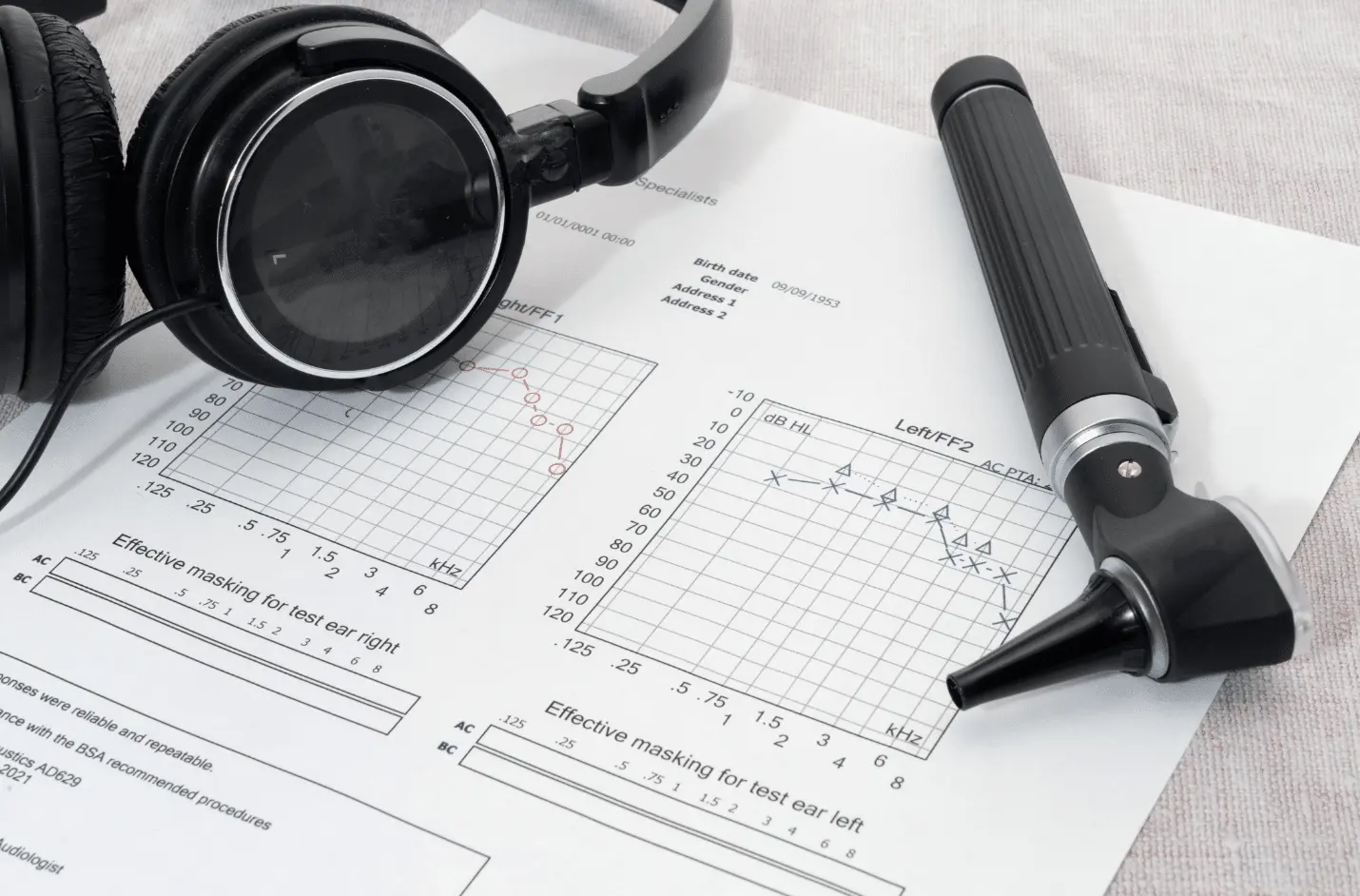
- Tympanometry objectively evaluates eardrum compliance and middle ear pressure in under 5 seconds per ear.
- Type A indicates normal function; Type B indicates middle ear fluid or perforation; Type C indicates Eustachian tube dysfunction.
- Acoustic reflex testing evaluates the stapedius muscle protective reflex and neural pathway integrity.
When a patient complains of blocked ears, muffled hearing, ear fullness, or persistent popping sounds, an ordinary hearing test using headphones is not enough. To evaluate what is happening behind the eardrum in the middle ear cavity, audiologists perform Tympanometry.
At Ensound Hearing Centre in DHA Phase 1, Lahore, tympanometry is an essential component of our diagnostic protocol for both children and adults. It takes only a few seconds per ear, is completely painless, and provides objective physiological measurements that distinguish between nerve-related hearing loss and treatable middle-ear conditions.
Here is an expert, patient-friendly breakdown of how tympanometry works, why it is performed, and how to interpret your Tympanogram report.
What Is Tympanometry?
Tympanometry is not a hearing test; it is an objective physiological test that evaluates the mobility of the tympanic membrane (eardrum) and the air pressure within the middle ear space.
The middle ear is an air-filled chamber containing the three smallest bones in the human body (the malleus, incus, and stapes). When sound hits the eardrum, it vibrates and transfers mechanical sound energy into the inner ear. For this vibration to occur efficiently, the air pressure inside the middle ear must be equal to the atmospheric pressure outside. If the middle ear fills with fluid, suffers negative pressure due to Eustachian tube dysfunction, or the eardrum becomes stiff or perforated, sound conduction drops dramatically.
How the Test Is Conducted at Ensound Hearing Centre
During a tympanometry assessment at our Lahore clinic:
- Otoscopic Examination: Our clinician first inspects your ear canal with an otoscope to ensure it is free of impacted cerumen (earwax) or visible foreign objects.
- Probe Insertion: A small, soft silicone probe tip is inserted snugly into the opening of your ear canal to create an airtight acoustic seal.
- Pressure Variation: The tympanometer introduces a gentle low-frequency tone (typically 226 Hz for adults or 1,000 Hz for infants) while gently altering air pressure from positive (+200 daPa) to negative (-400 daPa).
- No Active Participation Required: Unlike Pure Tone Audiometry where you must press a button, tympanometry requires zero patient response. You only need to sit quietly without speaking or swallowing for approximately 3 to 5 seconds per ear.
The machine measures how much sound energy bounces off the eardrum versus how much passes through, generating a visual graph called a Tympanogram.
Reading a Tympanogram: The 3 Primary Curve Types
Audiologists classify tympanogram graphs using the internationally recognized Jerger system into Types A, B, and C:
1. Type A Tympanogram: Normal Middle Ear Function
- What It Looks Like: A sharp, symmetrical bell-shaped tent with a peak centered near atmospheric zero (between -100 daPa and +50 daPa) with normal peak height (compliance: 0.3 to 1.6 ml).
- Clinical Meaning: The eardrum vibrates normally, the Eustachian tube is functioning properly, and there is no abnormal fluid in the middle ear.
- Subtypes:
- Type As (Shallow): A peak at normal pressure, but unusually stiff/low compliance. Often indicates otosclerosis (fixation of middle ear bones) or tympanosclerosis (scarred eardrum).
- Type Ad (Deep): An extremely high peak exceeding normal compliance limits. Often seen in ossicular disarticulation (broken chain of middle ear bones) or a hypermobile, thin eardrum.
2. Type B Tympanogram: Flat Line (Abnormal)
- What It Looks Like: A flat horizontal line with no discernible compliance peak.
- Clinical Meaning: The eardrum cannot move at all.
- Flat line with normal or small ear canal volume (<1.5 ml): Middle ear effusion (glue ear / fluid behind the eardrum) or severe otitis media. Sound cannot pass through because the middle ear is filled with liquid.
- Flat line with extremely large ear canal volume (>2.5 ml): Indicates a hole (perforation) in the eardrum or an open, functioning grommet (ventilation tube), because the pressure pulse measures both the canal and the middle ear space together.
3. Type C Tympanogram: Negative Middle Ear Pressure
- What It Looks Like: A normal-shaped peak that is shifted significantly to the negative side of the graph (worse than -100 to -150 daPa).
- Clinical Meaning: Significant negative pressure exists inside the middle ear cavity. This is a classic hallmark of Eustachian Tube Dysfunction (ETD)—often caused by allergic rhinitis, upper respiratory infections, sinus congestion, or recovering from recent flights. The Eustachian tube is failing to equalize middle ear pressure, creating a vacuum that pulls the eardrum inward.
Why Tympanometry Is Vital for Children in Pakistan
Children between the ages of 6 months and 7 years are especially prone to Otitis Media with Effusion (OME), commonly called "glue ear." Because children's Eustachian tubes are shorter, narrower, and more horizontal than adults', fluid frequently accumulates behind the eardrum following common colds or adenoid enlargement.
Because glue ear often develops without fever or earache, parents may only notice that their child seems inattentive, asks "what?" repeatedly, or has delayed speech milestones. Tympanometry detects asymptomatic middle ear fluid in under 5 seconds, allowing our audiologists to provide prompt medical referrals before language development is compromised.
Acoustic Reflex Testing: Testing the Stapedius Muscle
In addition to standard tympanometry, our clinical diagnostic equipment measures the Acoustic Stapedial Reflex (ART). In response to a moderately loud sound (70 to 100 dB HL), the tiny stapedius muscle in the middle ear involuntarily contracts to stiffen the ossicular chain and protect the delicate inner ear.
Evaluating whether this reflex is present, absent, or elevated provides critical diagnostic clues regarding facial nerve integrity, auditory nerve function, and brainstem pathway health.
The Ensound Comprehensive Care Protocol
At Ensound Hearing Centre in DHA Phase 1, Lahore, tympanometry is never interpreted in a vacuum. It is paired with video otoscopy, Pure Tone Audiometry (PTA), and speech discrimination testing. If middle ear fluid or conductive pathologies are identified, we coordinate directly with leading ENT specialists. If sensorineural hearing loss is confirmed, we guide patients through prescription digital hearing aid fittings with complete follow-up support.
Every hearing aid fitting at Ensound includes:
- A 1-year manufacturer warranty
- Custom ear molds
- 6 months of complimentary batteries for disposable models
- A first fine-tuning follow-up consultation at 4 weeks
- 1 full year of free clinical programming and adjustments
Book Your Middle Ear Evaluation in Lahore
If you are experiencing muffled sound, ear pressure, or suspected glue ear in your child, schedule an evaluation with the audiology team at Ensound Hearing Centre:
- Location: 12-G Second Floor, Phase 1 DHA, Lahore, 54000
- Telephone / WhatsApp: +92 300 4219127
- Appointment Booking: Schedule a Tympanometry Assessment
Related Hearing Care Guides
Need Personalized Advice on Hearing Aids?
Book a diagnostic consultation with our audiologists at 12-G Second Floor, Phase 1 DHA, Lahore.