Age-Related Hearing Loss (Presbycusis): Signs, Tests & Hearing Aids in Pakistan
- Presbycusis is the gradual, bilateral sensorineural hearing loss caused by age-related degeneration of cochlear hair cells.
- Family members often notice the signs first: TV volume creep, repeated "what?", difficulty on phone calls.
- Early hearing aid fitting helps the brain maintain its speech-processing pathways — waiting makes adaptation harder.
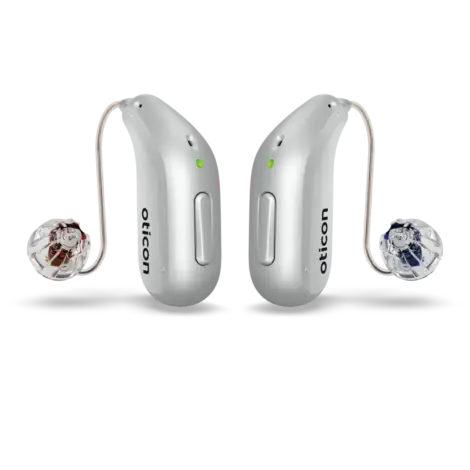
RIC Oticon Intent Rechargeable
Struggling to follow conversations at family gatherings. Asking people to repeat themselves. Turning the television up so loud that others complain. These are not simply signs of "getting old" — they are early indicators of presbycusis, the medical term for age-related hearing loss. It is one of the most prevalent chronic conditions in older adults worldwide, and it is far more common in Pakistan than most families realise.
This article is written for adult children and family members searching on behalf of an elderly parent, as well as for older adults who are beginning to notice changes in their own hearing. We explain what presbycusis is, how it is diagnosed, and what options are available.
What Is Presbycusis?
Presbycusis is a gradual, progressive, sensorineural hearing loss that develops with age. "Sensorineural" means the loss originates in the inner ear (cochlea) or the auditory nerve — as opposed to conductive hearing loss, which involves the outer or middle ear.
Inside the cochlea are thousands of microscopic hair cells called stereocilia. These cells translate sound vibrations into electrical signals that the brain interprets as sound. Over decades, these cells are exposed to cumulative noise, reduced blood supply, and metabolic changes — and they begin to degenerate. Unlike skin or bone cells, stereocilia do not regenerate. Once lost, the hearing loss they cause is permanent.
Presbycusis typically:
- Begins after the age of 50–60
- Affects high-frequency sounds first (consonants like "s", "f", "th", "sh")
- Progresses gradually and symmetrically (both ears equally)
- Worsens in noisy environments
Warning Signs Families Often Notice First
Because presbycusis develops slowly, the person experiencing it often adapts without realising the extent of the loss. Family members are frequently the first to notice. Common signs include:
- Frequent requests to repeat — "What? Say that again?" becomes a regular phrase
- Mishearing words — understanding the volume of speech but not the clarity; for example, "fish" sounds like "dish"
- Difficulty in groups or noisy rooms — restaurants, weddings, and family gatherings become exhausting
- Television volume — the TV is consistently louder than others in the household prefer
- Phone conversations are harder — particularly without visual cues
- Social withdrawal — some older adults begin avoiding social situations because communication has become too effortful
- Tinnitus — a ringing, buzzing, or hissing in the ears, which often accompanies age-related cochlear changes
If you are noticing two or more of these signs in an elderly parent or relative, a formal hearing assessment is strongly recommended.
Why Early Intervention Matters
Untreated hearing loss in older adults carries significant consequences beyond inconvenience. Research consistently associates it with:
- Cognitive decline and dementia — the auditory cortex requires stimulation to remain active; reduced input appears to accelerate cognitive changes
- Depression and social isolation — communication difficulty leads to withdrawal, which can profoundly affect mental wellbeing
- Falls and balance issues — the inner ear contributes to spatial awareness; cochlear health is linked to vestibular function
- Increased listening fatigue — the brain works considerably harder to interpret degraded sound, causing exhaustion
Early fitting with appropriately programmed hearing aids can slow or partially counteract some of these secondary effects by restoring auditory stimulation to the brain.
How Is Presbycusis Diagnosed? Tests We Use at Ensound
A definitive diagnosis requires a clinical hearing assessment, not simply an online test or a phone app. At Ensound Hearing Centre, a standard adult assessment for suspected presbycusis includes:
Pure Tone Audiometry (PTA)
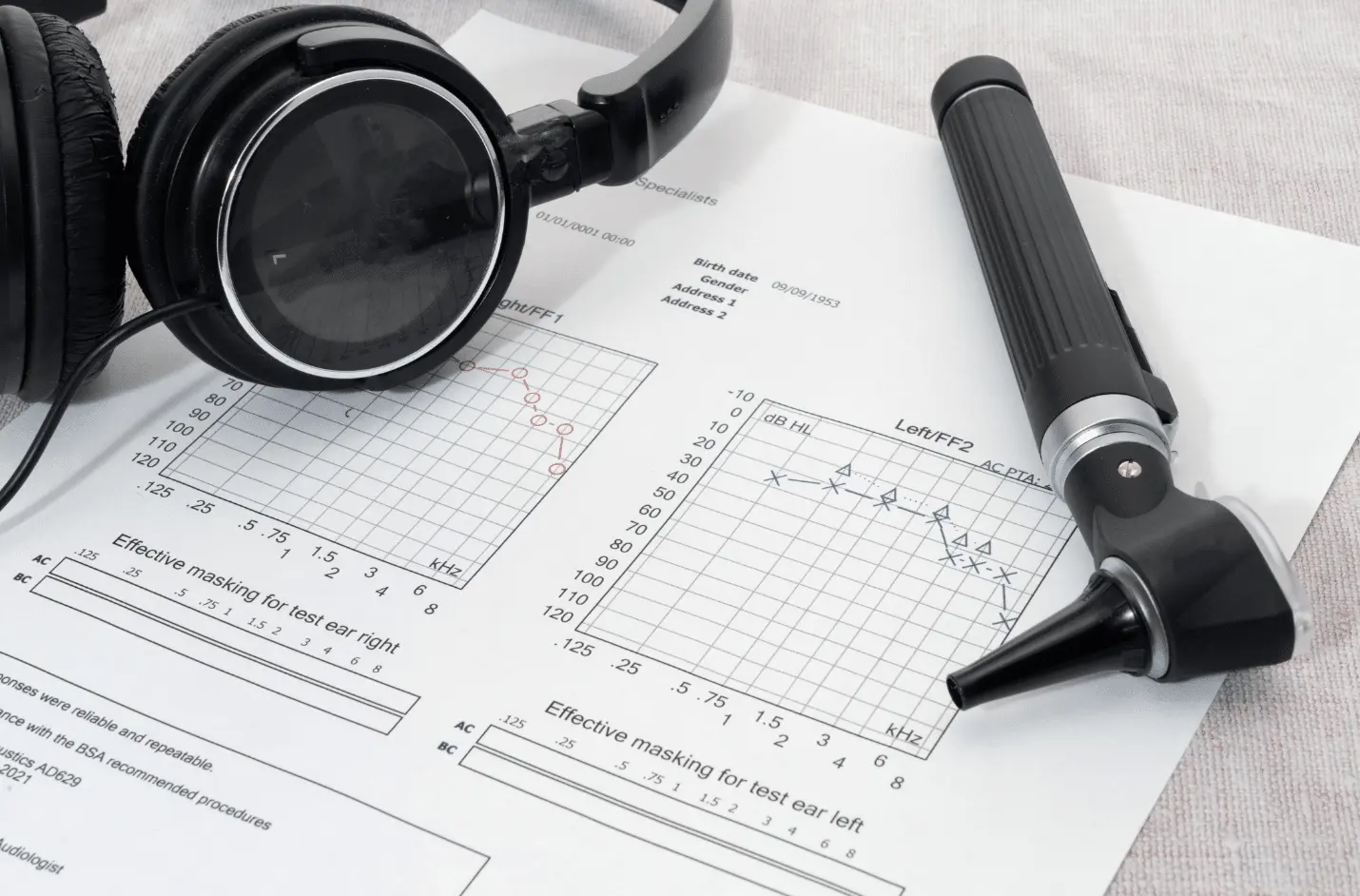
The foundational test. The patient wears headphones and responds to tones presented at different frequencies (250 Hz to 8000 Hz) and volumes. The result is an audiogram — a graph that maps hearing thresholds across frequencies. In presbycusis, the audiogram typically shows a downward slope at higher frequencies.
Speech Discrimination Testing
Measuring how well someone hears pure tones is only part of the picture. Speech discrimination testing assesses how clearly the patient understands words at a comfortable listening level. This score is critical for predicting hearing aid benefit and selecting the right amplification approach.
Tympanometry
A quick, non-invasive test that assesses middle ear function and eardrum mobility. It is used to rule out conductive components (such as fluid behind the eardrum or otosclerosis) that may be contributing to the hearing difficulty alongside age-related changes.
How Do Hearing Aids Help Presbycusis?
Modern hearing aids for presbycusis are sophisticated digital devices programmed precisely to an individual's audiogram. They are not volume amplifiers — they selectively amplify the frequencies where the loss exists, while leaving normal-range frequencies undisturbed.
Key features relevant to older adults include:
- Speech enhancement algorithms — designed to prioritise human speech over background noise
- Directional microphones — focus on the person speaking in front of the wearer
- Rechargeable batteries — remove the challenge of handling small button batteries for those with reduced dexterity
- Bluetooth streaming — connects to phones and televisions, bringing sound directly into the hearing aids
- Feedback management — eliminates the whistling that many people associate with older hearing aid technology
At Ensound Hearing Centre, following a hearing aid fitting, we schedule a first review at four weeks — this is the point at which real-world use has allowed the wearer to identify any adjustments needed. We then provide one year of free programming so the device continues to be optimised throughout the adaptation period.
What to Look for in a Clinic
When seeking audiological care for an elderly family member, consider whether the clinic:
- Conducts a full diagnostic assessment (not just a screening)
- Uses real-ear measurement to verify the hearing aid fitting against the audiogram
- Includes structured follow-up appointments
- Offers patient education for both the wearer and their family
- Provides clear information about warranties and ongoing support
Our hearing aid service page outlines what is included in a full assessment and fitting at Ensound. We also offer earwax removal and ear health checks as part of a comprehensive ear care approach.
Key Takeaways
- Presbycusis is a permanent, progressive sensorineural hearing loss caused by age-related degeneration of cochlear hair cells.
- High-frequency sounds are affected first, which is why speech clarity (not just loudness) suffers.
- Family members often notice the signs before the person with hearing loss does.
- Early intervention with professionally fitted hearing aids is associated with better cognitive, social, and communicative outcomes.
- Diagnosis requires PTA, speech discrimination testing, and tympanometry — not just a volume test.
- At Ensound, every fitting includes a four-week review, one year of free programming, and manufacturer warranty support.
Take the Next Step for Your Family Member
If a parent or loved one is showing signs of hearing difficulty, the kindest and most effective action you can take is to book a professional hearing assessment. Our team at Ensound Hearing Centre, DHA Phase 1, Lahore, works with older adults and their families to make the process as comfortable and informative as possible.
Book an appointment for your family member →
Related reading:
Related Hearing Care Guides
Need Personalized Advice on Hearing Aids?
Book a diagnostic consultation with our audiologists at 12-G Second Floor, Phase 1 DHA, Lahore.