
Noise-Induced Hearing Loss in Pakistan: Causes, Prevention & Audiometry
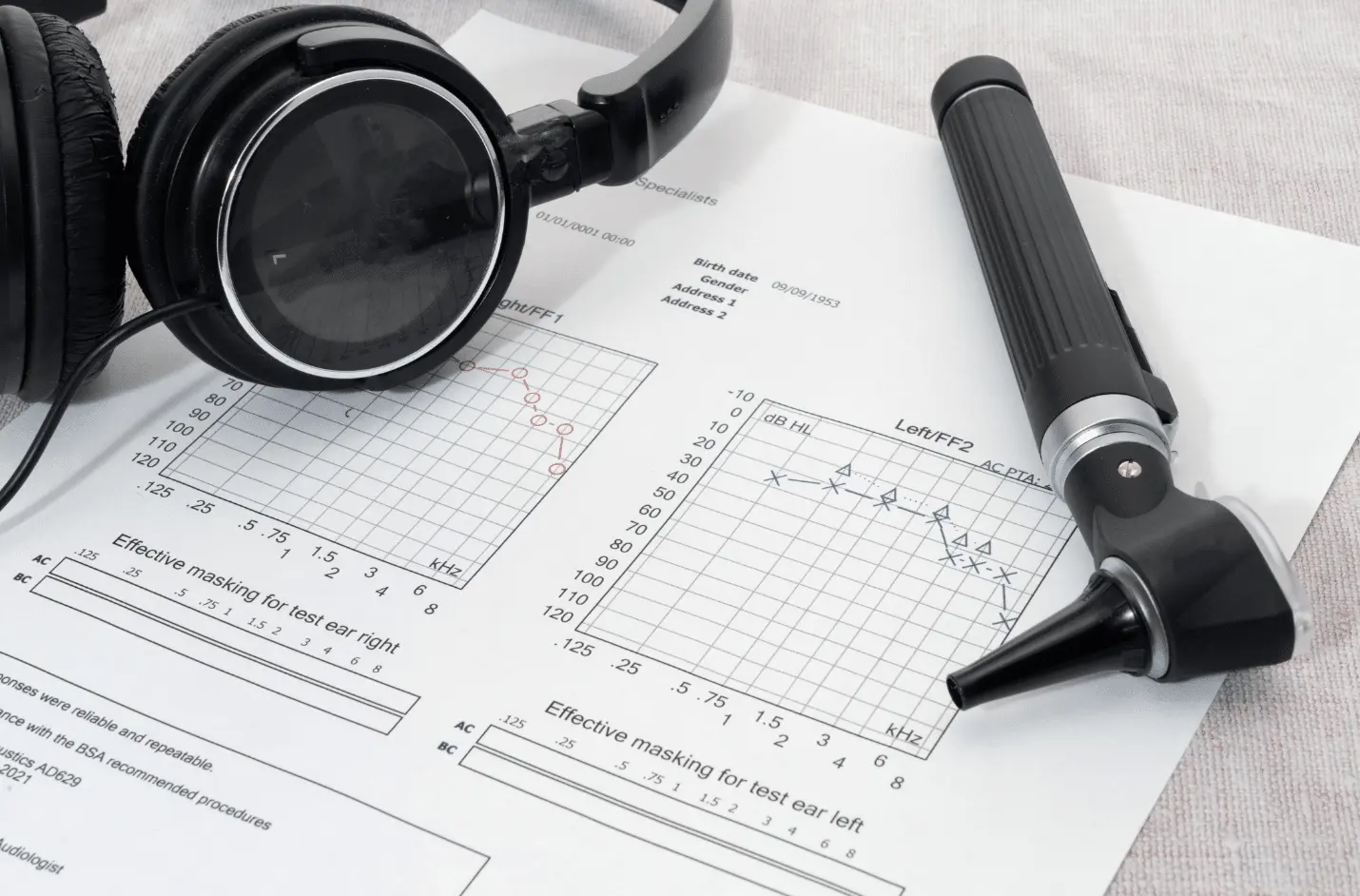
- NIHL causes a characteristic dip at 4,000 Hz on the audiogram — the frequency range critical for speech consonant clarity.
- Unlike age-related loss, NIHL can affect people in their 20s and 30s from prolonged earphone use or occupational noise.
- OAE (Otoacoustic Emissions) testing detects outer hair cell damage early — before thresholds shift on a standard audiogram.
Pakistan is a loud country. From the traffic of Lahore's main arteries to industrial sites, from mosques with high-output public address systems to personal earphones turned to damaging volumes — many Pakistanis experience daily noise exposures that, over time, cause irreversible hearing damage. The condition this produces is called noise-induced hearing loss (NIHL), and it is among the most common — yet most preventable — causes of permanent hearing impairment.
This article explains the science behind NIHL, the specific Pakistani noise environments that pose a risk, how audiologists detect early damage, and what can be done both to prevent loss and to manage it once it has occurred.
How Noise Damages Hearing: The Mechanism
The cochlea — the spiral-shaped organ in your inner ear — contains approximately 15,000 sensory hair cells (stereocilia). These cells respond to specific sound frequencies and convert vibration into electrical signals that the brain processes as sound.
When sound is excessively loud or sustained over long periods, it causes the stereocilia to become mechanically overstressed. This triggers a cascade of cellular damage including:
- Metabolic exhaustion — hair cells are deprived of the energy needed to recover
- Oxidative stress — free radicals generated by intense noise damage cell membranes
- Mechanical rupture — in cases of acute acoustic trauma (a single extremely loud event), hair cells can be physically destroyed
The key clinical finding is the 4 kHz notch — a characteristic dip in hearing sensitivity at the 4,000 Hz frequency on the audiogram. This specific pattern occurs because the part of the cochlea that processes 4 kHz is anatomically most vulnerable to acoustic overload.
Like age-related cochlear hair cell damage, NIHL is irreversible. The cells do not grow back. This makes prevention critically important.
Common Sources of Noise-Induced Hearing Loss in Pakistan
Urban Traffic and Road Noise
Lahore's traffic — particularly on arterial roads, at roundabouts, and during peak commuting hours — routinely produces noise levels of 85–95 dB SPL or higher. The internationally recognised safe exposure limit is 85 dB for no more than 8 hours per day, with permissible exposure time halving for every additional 3 dB. Motorcyclists without hearing protection, auto-rickshaw drivers, and traffic wardens face particularly high daily exposures.
Mosques and Public Address Systems
Many mosques across Pakistan use high-power PA systems for the call to prayer and sermons. Those who live or work immediately adjacent to mosque speakers, or who regularly attend prayers in spaces with inadequately calibrated PA systems, may be exposed to sound levels exceeding 100 dB — a level at which safe exposure is measured in minutes, not hours.
Industrial and Occupational Noise
Factories, construction sites, generators, and machinery in industrial areas of Lahore and surrounding cities are significant sources of occupational NIHL. Workers in textile mills, metalworking, and construction — without adequate hearing protection — face some of the highest cumulative exposures.
Personal Audio Devices and Earphones
This is one of the fastest-growing causes of NIHL among younger Pakistanis. The World Health Organization has estimated that over 1 billion young people globally are at risk from unsafe listening through personal devices. Listening at 80% volume through earphones for extended daily periods is sufficient to cause measurable cochlear damage over months to years. In-ear earphones (earbuds) are particularly risky because they deliver sound directly into the ear canal, bypassing some of the natural attenuation offered by over-ear headphones.
Weddings and Events
Traditional Pakistani celebrations — particularly weddings with live dhol performances, speaker stacks, and fireworks — can produce acute noise exposures well exceeding 110 dB. Even a single event at extreme levels can cause temporary threshold shift (TTS); repeated or prolonged exposure can cause permanent damage.
Decibel Thresholds and Exposure Limits
| Sound Level | Example | Safe Duration |
|---|---|---|
| 85 dB | Heavy traffic | 8 hours |
| 88 dB | Busy restaurant | 4 hours |
| 91 dB | Motorbike without helmet | 2 hours |
| 94 dB | Loud music earphones | 1 hour |
| 100 dB | Nightclub/wedding sound system | 15 minutes |
| 110 dB+ | Fireworks, dhol | < 2 minutes |
These thresholds follow the 3 dB exchange rate used in international occupational health standards (ISO 1999).
Early Detection: OAE Testing
One of the most valuable tools for detecting early noise-related cochlear damage — before the patient notices any subjective hearing difficulty — is the Otoacoustic Emission (OAE) test.
OAEs are faint sounds produced by healthy outer hair cells in the cochlea in response to stimulation. An OAE probe is placed in the ear canal; it delivers sound and then measures the cochlea's response. When outer hair cells are damaged — as occurs in early NIHL — OAE responses are reduced or absent, even when standard pure-tone thresholds appear normal.
This makes OAE testing particularly useful for:
- Workers in high-noise occupations requiring baseline and annual monitoring
- Young people with heavy earphone use who want to assess cochlear health
- Anyone with tinnitus (ringing in the ears) even with apparently normal hearing
- Athletes or musicians with regular loud sound exposure
At Ensound Hearing Centre, OAE testing is part of our diagnostic assessment suite, alongside Pure Tone Audiometry (PTA) and Tympanometry. For children and individuals who cannot reliably participate in behavioural testing, we also offer BERA (Auditory Brainstem Response) and ASSR testing.
Prevention Strategies
Prevention of NIHL is straightforward in principle, though it requires consistent habit:
- Use hearing protection — foam earplugs (NRR 20–33 dB) or earmuffs when working in loud environments or attending high-noise events
- Follow the 60/60 rule — limit earphone use to 60% of maximum volume for no more than 60 minutes without a break
- Increase distance from sound sources — doubling your distance from a speaker reduces the sound level by approximately 6 dB
- Advocate for workplace hearing programmes — employers in high-noise industries have a legal obligation in many jurisdictions to provide hearing protection
- Get baseline OAE testing — knowing your cochlear baseline allows future tests to detect change early
How Hearing Aids Help Those Already Affected
For patients who already have measurable NIHL, modern hearing aids can restore significant function. Because NIHL typically affects specific frequency regions (particularly the high frequencies around 4 kHz), modern digital devices can be precisely programmed to amplify only the affected frequencies. Features such as directional microphones, digital noise reduction, and speech enhancement algorithms are particularly beneficial for NIHL patients who struggle in background noise.
At Ensound Hearing Centre, all hearing aid fittings are preceded by a complete audiological assessment, and include a four-week review appointment, one year of free programming, and a manufacturer warranty. Custom ear moulds are provided where clinically appropriate.
Key Takeaways
- NIHL is caused by damage to cochlear hair cells from excessive noise — it is permanent and irreversible.
- The characteristic audiometric finding is a 4 kHz notch on the audiogram.
- Pakistani environments with particularly high risk include traffic, industrial workplaces, loud PA systems, personal earphones, and wedding events.
- OAE testing can detect early cochlear damage before subjective hearing loss is apparent.
- Consistent use of hearing protection and responsible listening habits can prevent NIHL.
- For those already affected, professionally fitted hearing aids can restore clarity and function.
Book a Hearing Assessment in Lahore
If you work in a noisy environment, have tinnitus, or are concerned about your hearing after years of noise exposure, do not wait for the problem to worsen. Our team at Ensound Hearing Centre in DHA Phase 1, Lahore offers OAE testing, PTA, and a full diagnostic assessment.
Contact us to schedule your hearing evaluation →
Further reading:
Related Hearing Care Guides
Need Personalized Advice on Hearing Aids?
Book a diagnostic consultation with our audiologists at 12-G Second Floor, Phase 1 DHA, Lahore.