
Rechargeable CROS Hearing Aids Guide: RIC Styles, Battery Life, Bluetooth Streaming & Best Models
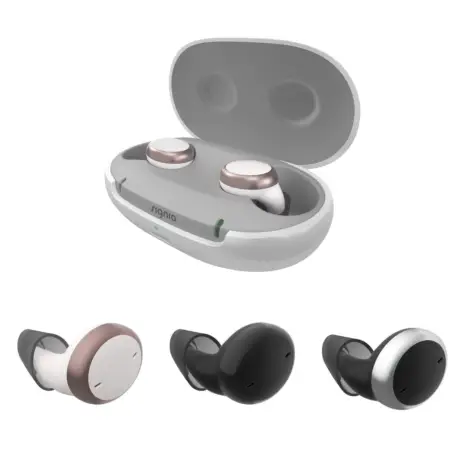
- Lithium-ion power solves the 2-to-3 day battery drain of continuous cross-head wireless streaming.
- TwinLink and Dual-Radio technology enable simultaneous CROS reception and smartphone Bluetooth calls.
- Enclosed IP68 moisture protection shields circuits from humidity and sweat.
Signia Active Pro
For decades, one of the biggest complaints from patients with Single-Sided Deafness (SSD) using CROS systems was battery life. Because a CROS transmitter must continuously beam full-bandwidth audio across the wearer's head 16 hours a day, traditional zinc-air button batteries would deplete in just 2 to 3 days.
Today, the transition to rechargeable lithium-ion technology has transformed single-sided deafness rehabilitation. Modern Rechargeable CROS hearing aids deliver full-day battery life, hands-free Bluetooth streaming, and superior sound quality in comfortable Receiver-In-Canal (RIC) designs. Here is everything you need to know about rechargeable CROS options in Pakistan.
1. Why Rechargeable Lithium-Ion Is Critical for CROS Wearers
A standard hearing aid only processes sound for one ear. A CROS system, however, has a dedicated radio transmitter operating constantly. Lithium-ion batteries provide the high energy density required for continuous binaural data exchange, delivering:
- 20 to 24+ Hours of Continuous Wear: Ample power for an active day without worrying about dying batteries during an evening dinner.
- No Tiny Battery Handling: Ideal for seniors or individuals with arthritis who struggle with miniature button batteries.
- Enclosed IP68 Ingress Protection: Because rechargeable devices have no opening battery door, they are significantly more resistant to sweat, rain, and dust.
2. Leading Rechargeable CROS Models Compared
| Model | Form Factor | Battery Life | Key Acoustic Advantage |
|---|---|---|---|
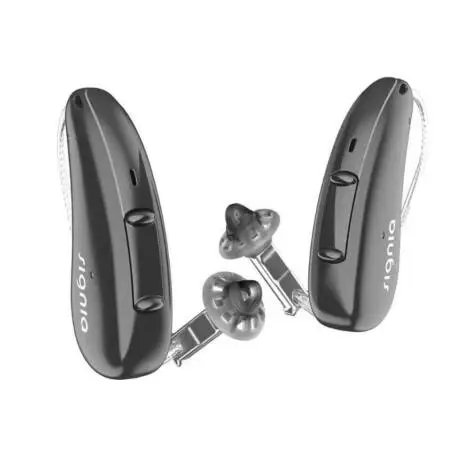
| Signia CROS Pure Charge&Go AX | Slim RIC | Up to 24 Hours | Augmented Xperience dual processors; Own Voice Processing (OVP); portable charger with built-in power bank. |
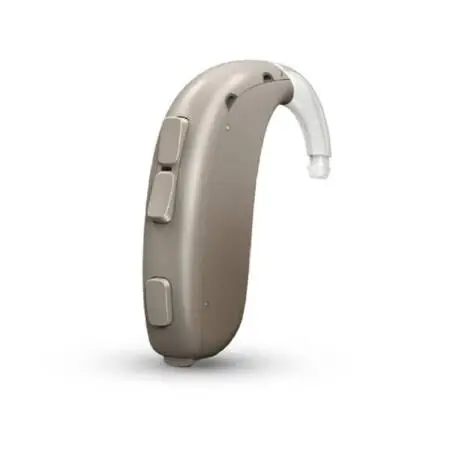
| Oticon CROS PX | miniRITE R | Up to 21 Hours | TwinLink™ technology allowing simultaneous cross-ear streaming while streaming phone calls directly from mobile. |
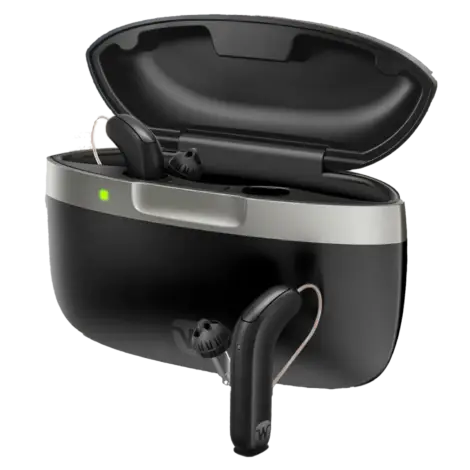
| Widex CROS Rechargeable | mRIC R D | Up to 22 Hours | ZeroDelay™ technology minimizing echo; seamless pairing with Widex Moment sound engine. |
3. Bluetooth Streaming While Using CROS
A common question from patients at our Lahore clinic is: "If the CROS transmitter is using wireless signals to send audio across my head, can I still stream phone calls and music from my mobile?"
With modern systems like Oticon TwinLink™ and Signia AX Dual-Radio, the answer is yes. The hearing aid in your better ear can receive sound from your CROS transmitter while simultaneously connecting via Bluetooth to your smartphone. When a call comes in, the system seamlessly prioritizes phone audio or blends both streams so you never miss surrounding conversation.
4. 5 Practical Adaptation Tips for New CROS Wearers
Adjusting to sound coming from your "bad" side into your good ear takes a brief period of neuroplastic adaptation:
- Start in Quiet Environments: Wear your CROS system at home for the first 3 to 4 days while watching TV or speaking with one family member.
- Practice Sitting with Your Deaf Ear to the Room: Purposely sit with your unaidable ear facing your family or colleagues. Notice how you can now hear their voices without physically turning your neck.
- Use Open Domes on the Better Ear: If your better ear has normal hearing, ensure your audiologist uses an open-fit dome so your natural hearing is never obstructed.
- Car Driving Advantage: Place your deaf ear toward the passenger side or driver side; CROS makes conversing in vehicles effortless for the first time in years.
- Follow-Up Calibration: Visit Ensound after 14 days for fine-tuning the cross-stream balance.
5. Professional CROS Evaluation in DHA Phase 1, Lahore
At Ensound Hearing Centre, we maintain active CROS demo inventory, enabling you to test a live wireless CROS system on your own ears before making any financial commitment.
Schedule your clinical trial today on our Appointment Booking Page or explore our Rechargeable Hearing Aids Directory.
Related Hearing Care Guides
Need Personalized Advice on Hearing Aids?
Book a diagnostic consultation with our certified audiologists at Building 82, Main Commercial, Sector CCA, DHA Phase 1, Lahore.